Uav battery development history
author: Beijing KNS New Energy Technology Co.,Ltd.
2024-06-07
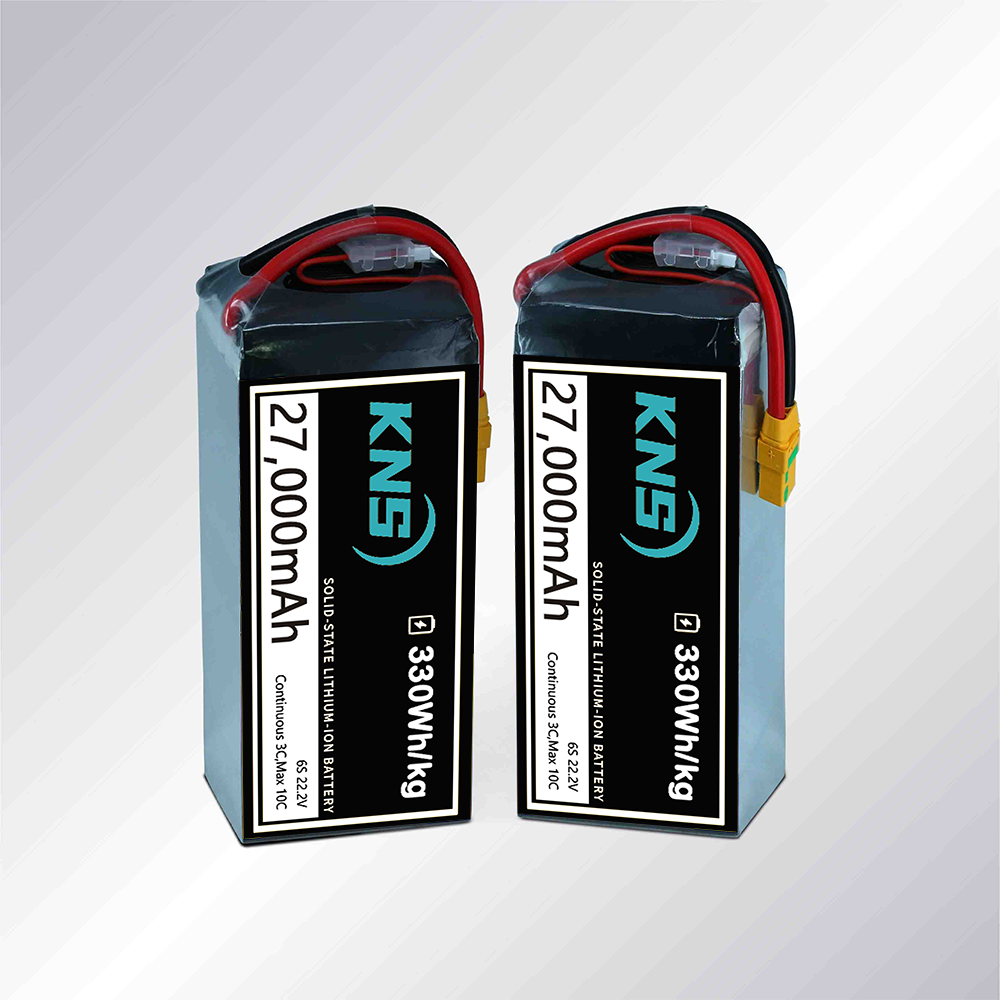
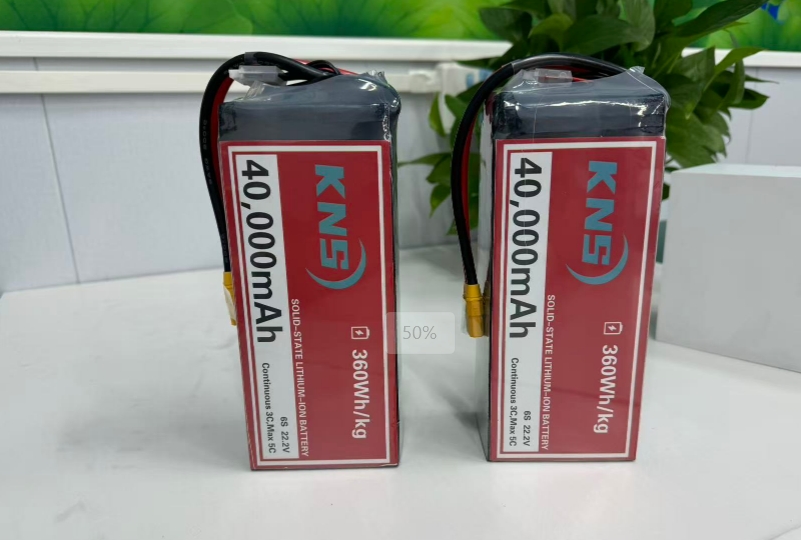
Solid-state lithium batteries are regarded as one of the development directions of future battery technology because of their high energy density, long life, fast charge and discharge and high safety. As an aircraft and mobile equipment, UAV has high requirements for battery performance and safety, so the development of solid-state lithium battery is of great significance to UAV.
The development of solid-state lithium batteries can be traced back to the mid-20th century. In 1959, Japanese scholar Eiji Wakamatsu first discovered the ionic conductive property of solid electrolyte, which caused extensive attention in the academic circle. In 1976, the French scholar Ackermann proposed the concept of polymer electrolyte, and then solid-state lithium batteries began to really enter the research stage.
In 1985, Kodak launched the world's first commercial solid-state Lithium battery, called the Lithium Ion Capacitor (LIC). LIC is widely used in military, civil aviation and other fields because of its high energy density and cycle life.
With the continuous development of solid-state lithium battery technology, the emergence of new materials and new structures provides the possibility for its performance improvement. In 2004, the Massachusetts Institute of Technology (MIT) announced the development of a solid-state lithium battery prototype with extremely high energy density and long cycle life, but its cost is too high to achieve large-scale commercial.
In 2017, Hitachi Chemical, a well-known battery manufacturer in Japan, launched the first commercial solid-state lithium battery, which has an energy density of 200Wh/kg and can work normally at -30 ° C. Subsequently, many well-known battery manufacturers in the world have launched their own solid-state lithium battery products, including LG Chemical, Ningde Times, BYD, Tesla and so on.
At present, solid-state lithium batteries still face challenges such as technology and commercialization, but with the further maturity of technology and the decline in cost, it is expected that more drones will use solid-state lithium batteries to replace traditional batteries in the next few years.
The development of solid-state lithium batteries can be traced back to the mid-20th century. In 1959, Japanese scholar Eiji Wakamatsu first discovered the ionic conductive property of solid electrolyte, which caused extensive attention in the academic circle. In 1976, the French scholar Ackermann proposed the concept of polymer electrolyte, and then solid-state lithium batteries began to really enter the research stage.
In 1985, Kodak launched the world's first commercial solid-state Lithium battery, called the Lithium Ion Capacitor (LIC). LIC is widely used in military, civil aviation and other fields because of its high energy density and cycle life.
With the continuous development of solid-state lithium battery technology, the emergence of new materials and new structures provides the possibility for its performance improvement. In 2004, the Massachusetts Institute of Technology (MIT) announced the development of a solid-state lithium battery prototype with extremely high energy density and long cycle life, but its cost is too high to achieve large-scale commercial.
In 2017, Hitachi Chemical, a well-known battery manufacturer in Japan, launched the first commercial solid-state lithium battery, which has an energy density of 200Wh/kg and can work normally at -30 ° C. Subsequently, many well-known battery manufacturers in the world have launched their own solid-state lithium battery products, including LG Chemical, Ningde Times, BYD, Tesla and so on.
At present, solid-state lithium batteries still face challenges such as technology and commercialization, but with the further maturity of technology and the decline in cost, it is expected that more drones will use solid-state lithium batteries to replace traditional batteries in the next few years.
The significance of solid state lithium batteries in the field of drones
Do you want a uav solid-state lithium battery that lasts a long time and is light?
Related Article
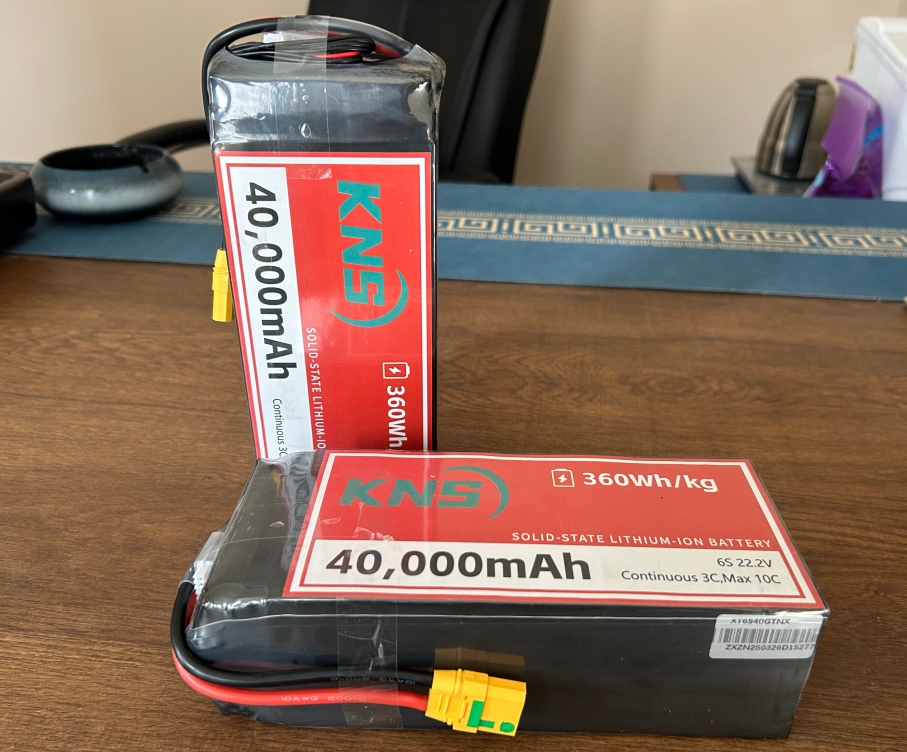
The Future of Flight is Solid: How KNS is Leading the 400Wh/kg Revolution in UAV Batteries
The Future of Flight is Solid: How KNS is Leading the 400Wh/kg Revolution in UAV Batteries
Why Settle for Less When You Can Have the Best?
Traditional lithium batteries are holding your drone back. KNS Solid-State Batteries unlock next-level power, safety, and flight time—backed by cutting-edge technology.
Traditional lithium batteries are holding your drone back. KNS Solid-State Batteries unlock next-level power, safety, and flight time—backed by cutting-edge technology.
Revolutionize Your Drone Performance with KNS Solid-State Drone Batteries!