Lithium-ion batteries
2024-11-19
Lithium-ion batteries
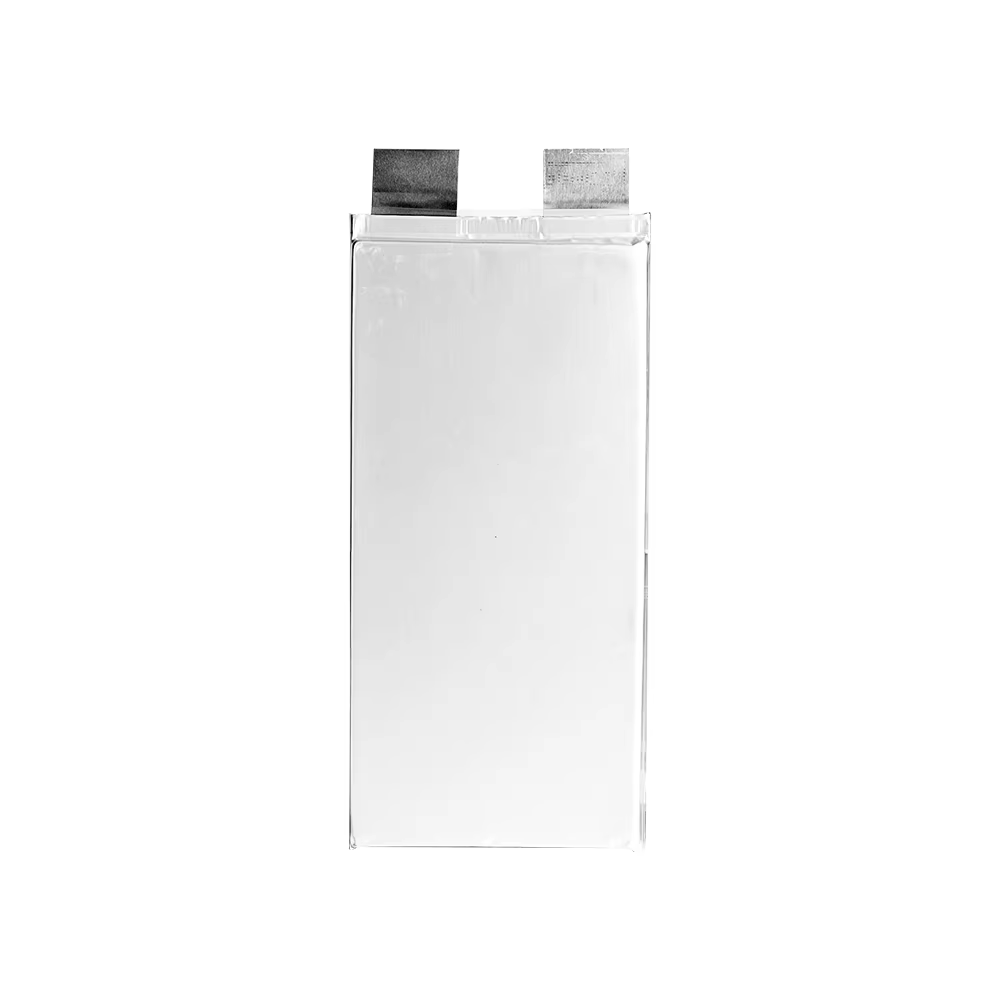
commonly known as Li-ion batteries, are rechargeable batteries that use lithium-ion as their electrolyte.
They are a type of energy storage device that can be used in a variety of applications, from portable electronic devices to electric vehicles.
The basic parameters of a Li-ion battery include its voltage, capacity, and energy density.
Voltage refers to the potential difference between the positive and negative terminals of the battery, and is typically around 3.7V for a single cell Li-ion battery.
Capacity refers to the amount of energy that the battery can store, and is measured in ampere-hours (Ah).
commonly known as Li-ion batteries, are rechargeable batteries that use lithium-ion as their electrolyte.
They are a type of energy storage device that can be used in a variety of applications, from portable electronic devices to electric vehicles.
The basic parameters of a Li-ion battery include its voltage, capacity, and energy density.
Voltage refers to the potential difference between the positive and negative terminals of the battery, and is typically around 3.7V for a single cell Li-ion battery.
Capacity refers to the amount of energy that the battery can store, and is measured in ampere-hours (Ah).
Energy density, on the other hand, refers to the amount of energy that the battery can store per unit volume or weight, and is typically measured in watt-hours per liter (Wh/L) or watt-hours per kilogram (Wh/kg).
In general, Li-ion batteries offer several advantages over other types of batteries, including higher energy densities, longer cycle life, and lower self-discharge rates.
In general, Li-ion batteries offer several advantages over other types of batteries, including higher energy densities, longer cycle life, and lower self-discharge rates.
However, they also have some disadvantages, such as a need for protective measures to prevent overcharging and overheating,
and potential safety risks if not handled properly.
This includes six common parameters:
(1) Battery capacity: commonly understood as the total number of electrons that can be released from the battery for external use, which is determined by the active substances inside the battery (positive electrode materials: lithium cobalt oxide, lithium manganese oxide, ternary materials, lithium iron phosphate, etc.; negative electrode materials: carbon, graphite, silicon carbide, lithium titanate, etc.)
(2) Nominal voltage: the potential difference between the battery's positive and negative electrodes is called the battery's nominal voltage. During the discharge process of a lithium battery, the time spent at a certain voltage value between the charging termination voltage and discharge termination voltage is the longest. This voltage can be called the nominal voltage, which comes in three types for lithium batteries: 3.7V, 3.8V, and 3.2V. If it is 3.7V, the charging termination voltage is 4.2V, and if it is 3.8V, the charging termination voltage is 4.35V (for example, the GRIP high-voltage battery series increases energy density by raising the voltage). The nominal voltage of a lithium iron phosphate battery is 3.2V, which has the highest energy at this voltage range. (Note: the voltage shown on most battery labels is the nominal voltage.)
(3) Termination charging voltage: When a rechargeable battery is fully charged, the active material on the electrode plate has reached saturation, and the battery voltage will not increase even if charging continues. This voltage is known as the termination charging voltage. For lithium-ion batteries, it is 4.2V or 4.35V, and for lithium iron phosphate batteries, it is 3.65V.
(4) Termination discharge voltage: The termination discharge voltage is the lowest voltage allowed during battery discharge. It is related to the discharge rate. Generally, single-unit lithium-ion batteries have a termination discharge voltage of 2.7V. Our batteries have a termination discharge voltage of 2.75V, and will not cause a voltage cliff drop below 3.3V. Below 3V, the voltage drop speed will increase, but it will not cause the device to explode. Conventional drones use cobalt lithium batteries with a cutoff voltage of 3.3V. If the voltage drops below 3.3V, the capacity will decrease rapidly, leading to a risk of explosion. To ensure safety, customers typically use a cutoff voltage of 3.5V for drones, and for high voltage batteries, 3.6V is sufficient.
(5) Battery internal resistance: The internal resistance of a battery is determined by the resistance of the electrode plate and the impedance of ion flow. During the charging and discharging process, the resistance of the image engine and electrode plate remains constant, but the impedance of ion flow will change with changes in electrolyte concentration and charged ions. As the OCV voltage of a lithium battery decreases, impedance increases. Therefore, during low voltage charging (less than 3V), a trickle charge should be performed to prevent excessive heating due to high current. Our batteries have an internal resistance of less than 15 milliohms. If customers ask about internal resistance, it shows that they have some understanding of batteries.
(6) Self-discharge rate: The self-discharge rate refers to the percentage of the total capacity lost due to battery self-discharge during a certain period of time when the battery is not in use. The self-discharge rate of lithium-ion batteries at room temperature is generally 5%-8%. Our batteries have a self-discharge rate of less than 3% within a month. This means that the battery loses 3% of its charge in one month, which can be charged back and the capacity will not decrease. However, if the battery is not used for a long time, it is recommended to charge and discharge it once every three months to maintain battery activity.
(4) Termination discharge voltage: The termination discharge voltage is the lowest voltage allowed during battery discharge. It is related to the discharge rate. Generally, single-unit lithium-ion batteries have a termination discharge voltage of 2.7V. Our batteries have a termination discharge voltage of 2.75V, and will not cause a voltage cliff drop below 3.3V. Below 3V, the voltage drop speed will increase, but it will not cause the device to explode. Conventional drones use cobalt lithium batteries with a cutoff voltage of 3.3V. If the voltage drops below 3.3V, the capacity will decrease rapidly, leading to a risk of explosion. To ensure safety, customers typically use a cutoff voltage of 3.5V for drones, and for high voltage batteries, 3.6V is sufficient.
(5) Battery internal resistance: The internal resistance of a battery is determined by the resistance of the electrode plate and the impedance of ion flow. During the charging and discharging process, the resistance of the image engine and electrode plate remains constant, but the impedance of ion flow will change with changes in electrolyte concentration and charged ions. As the OCV voltage of a lithium battery decreases, impedance increases. Therefore, during low voltage charging (less than 3V), a trickle charge should be performed to prevent excessive heating due to high current. Our batteries have an internal resistance of less than 15 milliohms. If customers ask about internal resistance, it shows that they have some understanding of batteries.
(6) Self-discharge rate: The self-discharge rate refers to the percentage of the total capacity lost due to battery self-discharge during a certain period of time when the battery is not in use. The self-discharge rate of lithium-ion batteries at room temperature is generally 5%-8%. Our batteries have a self-discharge rate of less than 3% within a month. This means that the battery loses 3% of its charge in one month, which can be charged back and the capacity will not decrease. However, if the battery is not used for a long time, it is recommended to charge and discharge it once every three months to maintain battery activity.
//www.knsenergy.cn
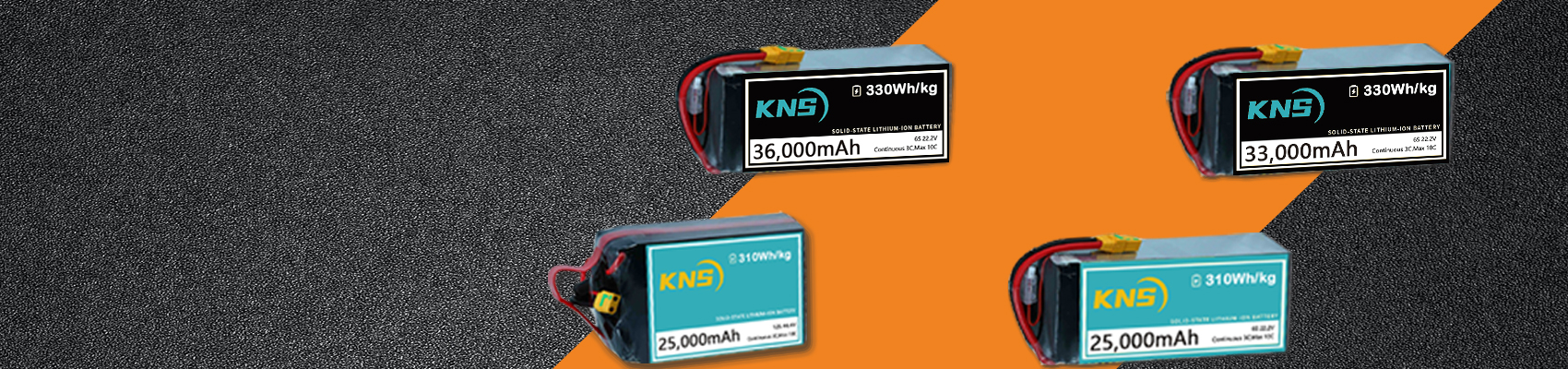
Revolutionize Your Drone Performance with KNS Solid-State Drone Batteries!
Question and Answer of KNS Solid state li-ion Battery
Related Article
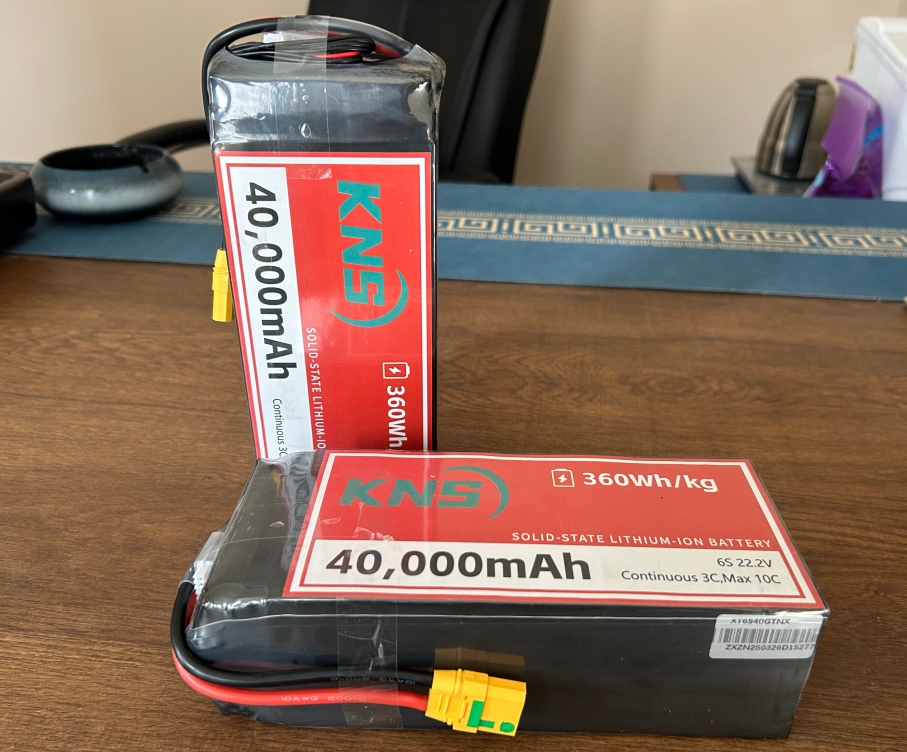
The Future of Flight is Solid: How KNS is Leading the 400Wh/kg Revolution in UAV Batteries
The Future of Flight is Solid: How KNS is Leading the 400Wh/kg Revolution in UAV Batteries
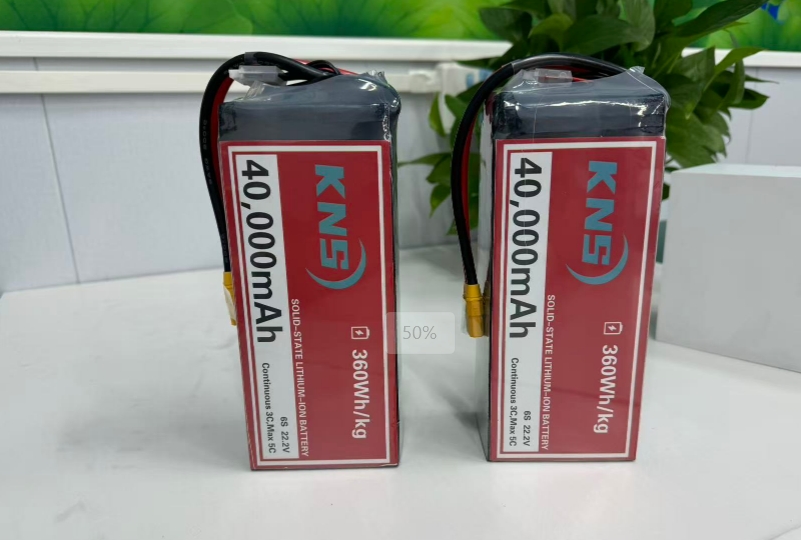
Why Settle for Less When You Can Have the Best?
Traditional lithium batteries are holding your drone back. KNS Solid-State Batteries unlock next-level power, safety, and flight time—backed by cutting-edge technology.
Traditional lithium batteries are holding your drone back. KNS Solid-State Batteries unlock next-level power, safety, and flight time—backed by cutting-edge technology.
Revolutionize Your Drone Performance with KNS Solid-State Drone Batteries!