Solid-State Lithium Battery Technology for UAV Applications
2024-11-15

Solid-State Lithium Battery Technology for UAV Applications
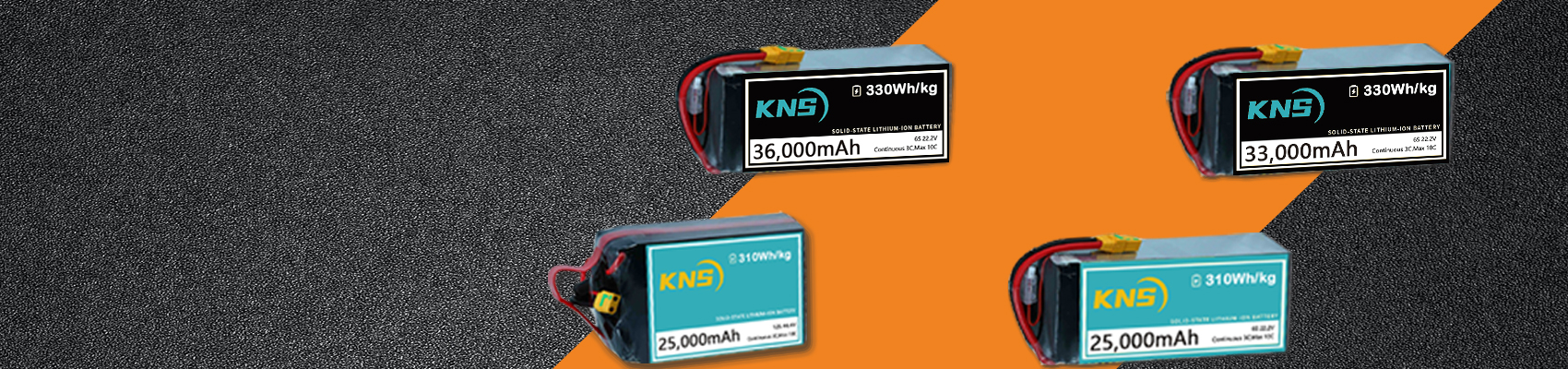
Currently, lithium batteries remain the preferred power source for UAVs and occupy an irreplaceable position. Beijing Kenesen New Energy Technology has launched a new generation of lithium batteries that meet the needs of industry application customers. Compared to battery products available in the market, it has several major advantages:
1. Ultra-high energy density: The current generation of products has reached 275Wh/kg, more than 30% higher than ordinary lithium batteries. This means that with the same weight and volume, 30% more battery capacity can be obtained. We offer a direct replacement for mainstream battery packs such as 6S 12Ah, 6S 16Ah, and 6S 22ah with the JF-TS1 series. Depending on the different model configurations, actual test results show more than 20% increased flight time compared to previous configurations with the same capacity.
2. Strong cycle life: The KNS-1 series battery has no significant capacity decay after 500 cycles of 3C discharge. Although the KNS-1 series battery can discharge up to 10C, we recommend not exceeding 3C discharge to achieve the best balance between performance and service life. As a power source for industrial applications, it differs from the usage rules of recreational and consumer-grade UAVs. Many high-discharge rate batteries on the market, with a nominal discharge rate of up to 100C, do not consider continuous lifespan. The cycle life using rated discharge is generally around 10 cycles.
3. Stable discharge rate: We emphasize the reliability and consistency of the KNS-1 series battery to ensure continuous and stable power supply for UAV busbars. For example, a UAV powered by a 12S 30Ah battery with a bus voltage of about 44V and a continuous bus current of 90A (3C discharge), has a total input power of 4000W and a takeoff weight of about 30-40kg. The KNS-1 series battery has been tested on dozens of different models and can fully meet normal usage requirements.
4. Wide applicability: The KNS-1 series battery is fully compatible with the current lithium battery electrical interfaces and charger settings in the market, without the need to replace UAV electrical interfaces or set up additional chargers.
5. Excellent low-temperature performance: The TS1 series can be discharged at -20C and still release 80% of its capacity. We do not recommend discharging below -20C or charging below 0C, to ensure battery life.
*If the flight time decreases, consideration should be given to the voltage protection settings of the flight control system. The KNS-1 series battery can still maintain power output at a deeper discharge voltage. DJI A3 series flight controllers do not support 3.3V low voltage discharge, so the KNS-1 series battery is not suitable.
*Fixed-wing UAVs have much higher aerodynamic efficiency than multi-rotor UAVs, typically with a flight time of more than an hour. The KNS-1 series battery can be directly replaced, theoretically extending flight time by 30%.
*Mixed-wing/tilt-rotor UAVs are new models in recent years that combine multi-rotor and fixed-wing UAVs. If the cruise power is supplied with KNS-1 series batteries, it can be directly replaced, theoretically extending flight time by 30%. If both the vertical takeoff and landing power and the cruise power are supplied with KNS-1 series batteries, the vertical takeoff and landing current should be calculated and the discharge rate should not exceed 5C to extend battery life (for details please contact Beijing Kenesen New Energy Technology technical personnel).
Currently, lithium batteries remain the preferred power source for UAVs and occupy an irreplaceable position. Beijing Kenesen New Energy Technology has launched a new generation of lithium batteries that meet the needs of industry application customers. Compared to battery products available in the market, it has several major advantages:
1. Ultra-high energy density: The current generation of products has reached 275Wh/kg, more than 30% higher than ordinary lithium batteries. This means that with the same weight and volume, 30% more battery capacity can be obtained. We offer a direct replacement for mainstream battery packs such as 6S 12Ah, 6S 16Ah, and 6S 22ah with the JF-TS1 series. Depending on the different model configurations, actual test results show more than 20% increased flight time compared to previous configurations with the same capacity.

2. Strong cycle life: The KNS-1 series battery has no significant capacity decay after 500 cycles of 3C discharge. Although the KNS-1 series battery can discharge up to 10C, we recommend not exceeding 3C discharge to achieve the best balance between performance and service life. As a power source for industrial applications, it differs from the usage rules of recreational and consumer-grade UAVs. Many high-discharge rate batteries on the market, with a nominal discharge rate of up to 100C, do not consider continuous lifespan. The cycle life using rated discharge is generally around 10 cycles.

3. Stable discharge rate: We emphasize the reliability and consistency of the KNS-1 series battery to ensure continuous and stable power supply for UAV busbars. For example, a UAV powered by a 12S 30Ah battery with a bus voltage of about 44V and a continuous bus current of 90A (3C discharge), has a total input power of 4000W and a takeoff weight of about 30-40kg. The KNS-1 series battery has been tested on dozens of different models and can fully meet normal usage requirements.

4. Wide applicability: The KNS-1 series battery is fully compatible with the current lithium battery electrical interfaces and charger settings in the market, without the need to replace UAV electrical interfaces or set up additional chargers.
5. Excellent low-temperature performance: The TS1 series can be discharged at -20C and still release 80% of its capacity. We do not recommend discharging below -20C or charging below 0C, to ensure battery life.
*If the flight time decreases, consideration should be given to the voltage protection settings of the flight control system. The KNS-1 series battery can still maintain power output at a deeper discharge voltage. DJI A3 series flight controllers do not support 3.3V low voltage discharge, so the KNS-1 series battery is not suitable.
*Fixed-wing UAVs have much higher aerodynamic efficiency than multi-rotor UAVs, typically with a flight time of more than an hour. The KNS-1 series battery can be directly replaced, theoretically extending flight time by 30%.
*Mixed-wing/tilt-rotor UAVs are new models in recent years that combine multi-rotor and fixed-wing UAVs. If the cruise power is supplied with KNS-1 series batteries, it can be directly replaced, theoretically extending flight time by 30%. If both the vertical takeoff and landing power and the cruise power are supplied with KNS-1 series batteries, the vertical takeoff and landing current should be calculated and the discharge rate should not exceed 5C to extend battery life (for details please contact Beijing Kenesen New Energy Technology technical personnel).

website: www.knsenergy.cn
Question and Answer of KNS Solid state li-ion Battery
The advantage of solid state li-ion battery
Related Article
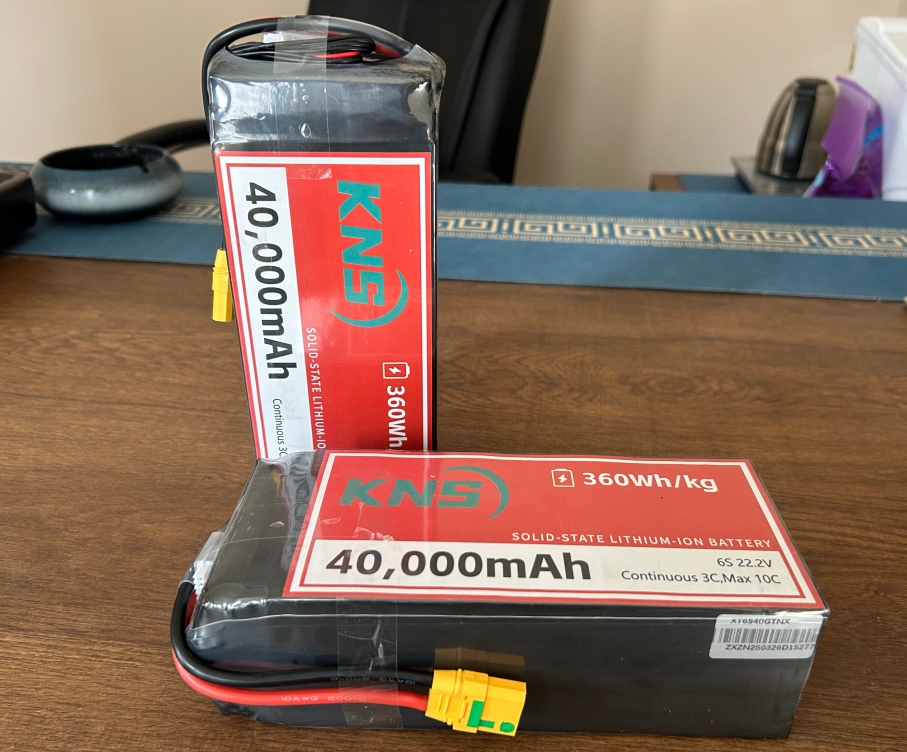
The Future of Flight is Solid: How KNS is Leading the 400Wh/kg Revolution in UAV Batteries
The Future of Flight is Solid: How KNS is Leading the 400Wh/kg Revolution in UAV Batteries
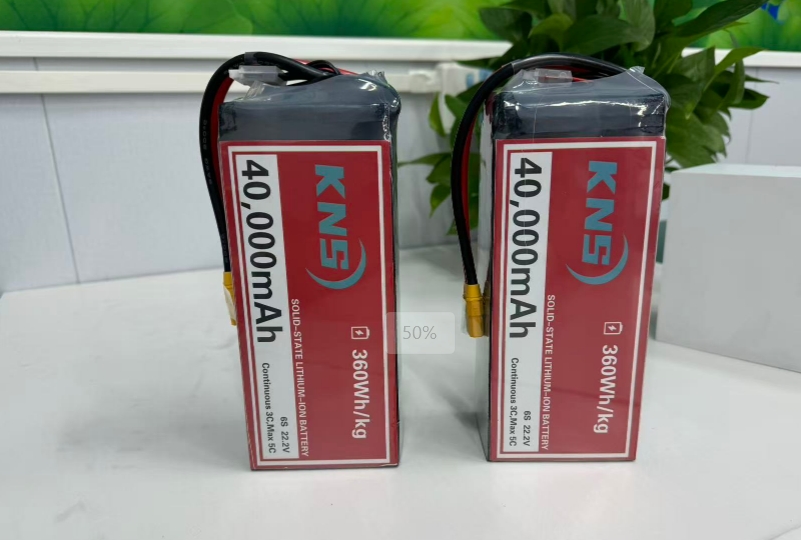
Why Settle for Less When You Can Have the Best?
Traditional lithium batteries are holding your drone back. KNS Solid-State Batteries unlock next-level power, safety, and flight time—backed by cutting-edge technology.
Traditional lithium batteries are holding your drone back. KNS Solid-State Batteries unlock next-level power, safety, and flight time—backed by cutting-edge technology.
Revolutionize Your Drone Performance with KNS Solid-State Drone Batteries!